
Retail promos can drive big spikes in sales. However, many offers feel random. One week, it is free shipping. Next week, there will be a flash sale. Then it is a gift with purchase that no one asked for. When offers lack a plan, shoppers get confused, demand stays weak, and margins take the hit.
A retail offer framework fixes that. It gives you a repeatable way to build a promotional offer that fits your customer, your product, and your goals. It also helps your retail messaging feel clear and consistent.
Why most marketing promos fall flat
Promos fail when the offer does not match what shoppers want right now. They also fail when the message is vague or the rules feel messy. Even a strong incentive can underperform if shoppers do not understand it fast.
Common problems include these issues.
- The offer solves the wrong problem
- The deal is hard to understand
- The terms feel strict or confusing
- The timing does not match shopping habits
- The message does not say who it is for
The fix is not more promos. The fix is better marketing strategies.
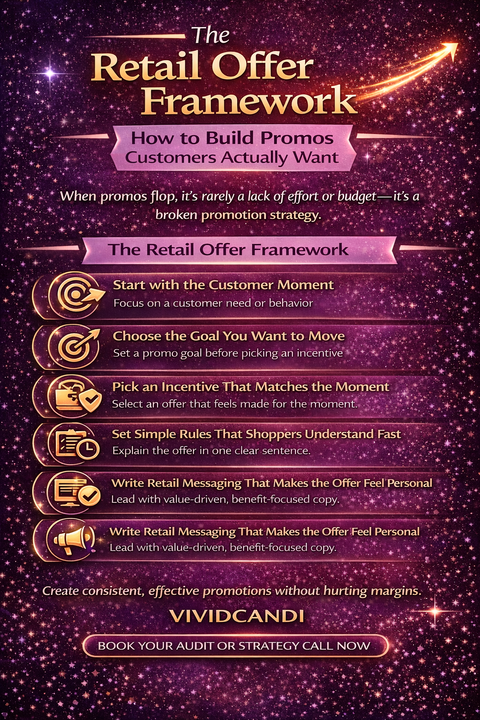
The Retail Offer Framework
This framework uses five parts. When you build each part with care, the promo feels made for your shopper. It also becomes easier to plan your calendar.
1. Start with the customer moment
A customer moment is the reason someone might buy today. It is the need behind the order. When you start here, you stop guessing.
Ask what is happening for your shopper.
- Are they restocking
- Are they trying a new product
- Are they shopping for a gift
- Are they looking for a quick win
- Are they worried about shipping speed
- Are they unsure about fit or quality
Then pick one moment to focus on. A promo that tries to solve everything will feel weak.
2. Choose the goal you want to move
A promo should push one main goal. Pick the goal before you pick the incentive.
Common promo goals include these outcomes.
- Drive first purchase
- Increase average order value
- Clear slow moving stock
- Grow repeat buys
- Boost a category that needs attention
- Improve conversion on high intent traffic
When you pick the goal first, you can measure the result. You also avoid random deals.
3. Pick an incentive that matches the moment
The best incentive feels like help. It does not feel like a trick.
Here are incentives that often work well when matched to the right moment.
- Free shipping for shoppers who hesitate at checkout
- Gift with purchase for shoppers who want extra value
- Bundle savings for shoppers who want a full set
- Buy more get more for restock and repeat orders=
- Early access for loyal shoppers who want first picks
- Free returns upgrade for fit and try on worries
A discount can work, but it is not the only tool. Many brands lift demand with value based incentives that protect margin.
4. Set simple rules that shoppers understand fast
Rules should be short and clear. If a shopper has to reread your promo, you may lose the sale.
Use these guidelines.
- Keep the offer to one sentence
- Use a clear spend or item trigger
- Avoid too many limits
- Show the end date and time
- Make the steps match the checkout flow
Also show the offer on the product page and in the cart. Do not hide it in fine print.
5. Write retail messaging that makes the offer feel personal
Good retail messaging answers three questions in a few seconds.
- What is the offer
- Who is it for
- Why now is the right time
Keep your copy direct. Use simple words. Lead with the main benefit. Then explain the details.
Example structure.
Headline that states the value
One line that says who it helps
One line that explains how to get it
One line that says when it ends
This keeps your promo clear across email, ads, and onsite banners.
How to use the framework to build better promos
Once you know the five parts, you can build offers faster. You can also reuse what works.
1. Build three core promo types
Most brands do not need twenty kinds of promos. They need a small set they can run well.
Create three promo types tied to your goals.
A new customer offer
An order growth offer
A loyalty offer
Then rotate the message and the timing. This keeps your calendar fresh without starting from scratch every time.
2. Match the promo to the product
Promos should fit what you sell.
If your product needs trust, use a risk reducer like free returns or a trial.
If your product is bought in sets, use bundles.
If your product is restocked often, use buy more get more.
If your product has many choices, guide shoppers with a starter set.
This is how incentives become more than a price cut. They become a reason to buy.
3. Plan timing around customer behavior
Timing matters. A promo can be strong and still miss if it runs at the wrong time.
Use these timing cues.
Paydays and month starts for restocks
Weekends for browsing and larger carts
Season shifts for new arrivals
Gifting windows for bundles and fast shipping
Also avoid training shoppers to wait. If every week is a sale, shoppers learn to pause. Use promos with purpose and keep your value clear the rest of the time.
4. Quick Checks Before You Launch
Before you push a promo live, run these checks to raise your odds of success.
Can a shopper explain the offer in one sentence
Does the offer show on mobile without scrolling too far
Do your emails, ads, and site banners match the same words
Does the cart confirm the promo right away
Do you have one main call to action
These checks sound simple. However, they prevent the most common promo mistakes.
Examples of promos customers often want
These examples can spark ideas. They work best when you match them to your customer moment.
Starter bundle with a small bonus item
Free shipping over a clear threshold
Gift with purchase that fits the product
Early access for top customers
Buy two get a third at a reduced price for restocks
Free upgrade like faster shipping during gift season
The key is to keep the offer clear and the value real.
5. Turn random promos into steady revenue growth
When you use a retail offer framework, your promos stop feeling like guesses. You build each promotional offer with intent. You also improve retail messaging because every campaign has a clear point.
That is how you build demand without burning margin.
Ready to Build Marketing Offers That Perform
If your promos feel random or demand is weak, a fast audit can uncover what to fix first. Vivid Candi Marketing Agency reviews your offer mix, your retail messaging, and your onsite promo flow. Then you get a clear offer plan you can run right away.
Book a retail marketing audit or strategy call with Vivid Candi. A limited number of audit spots open each month to keep support hands on. Reserve your spot now before the next openings are gone.