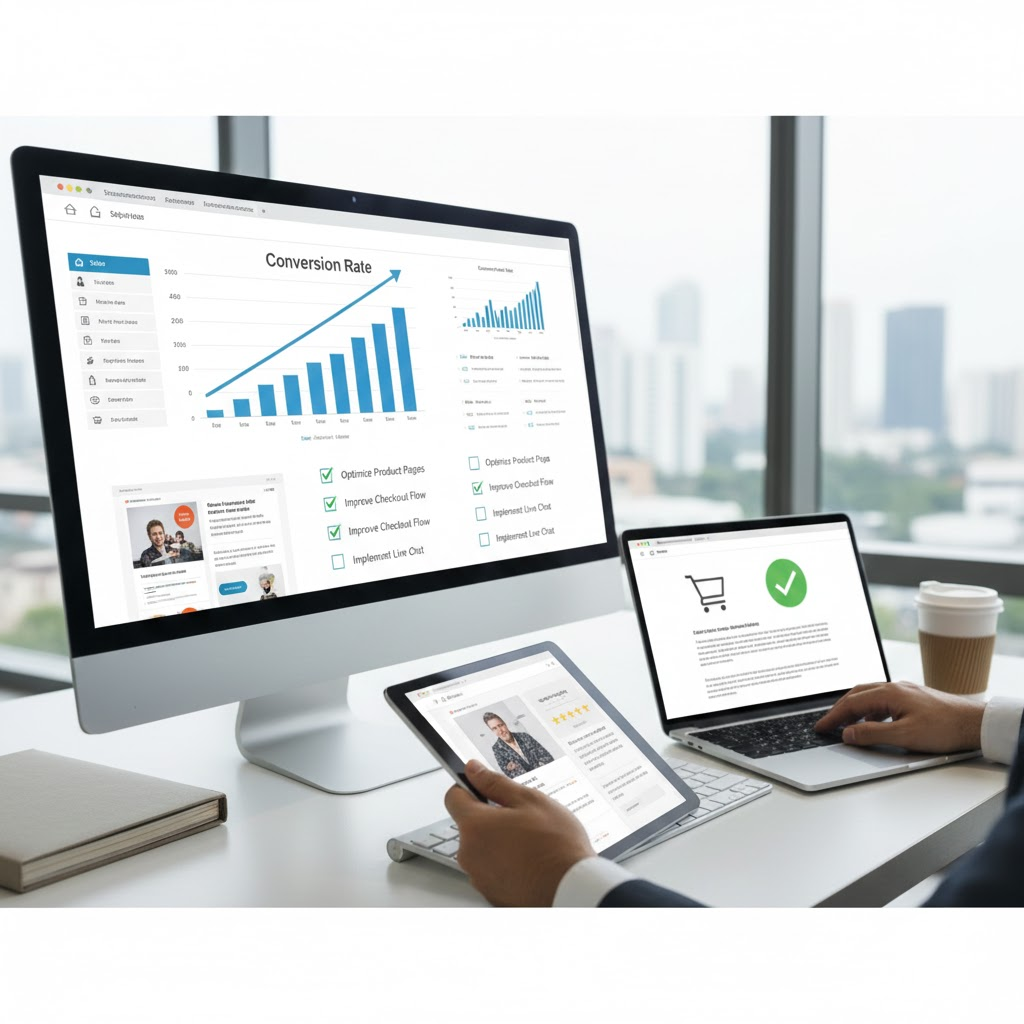
Driving traffic to your retail website is only half the battle. Many brands invest heavily in ads, SEO, and campaigns—only to see visitors browse, hesitate, and leave. If traffic exists but conversion is low, the problem isn’t visibility. It’s conversion rate optimization.
When shoppers don’t convert, it usually means the website experience isn’t guiding them toward a decision. This retail CRO checklist breaks down where conversions typically fail and what to fix to turn existing traffic into sales.
The Core Issue: Traffic Without Sales
Low conversion doesn’t mean your audience is wrong. It means something in the experience is creating friction. Slow pages, unclear messaging, weak product presentation, or confusing navigation can quietly kill intent.
Effective conversion rate optimization focuses on removing doubt, reducing effort, and reinforcing value at every step of the journey.
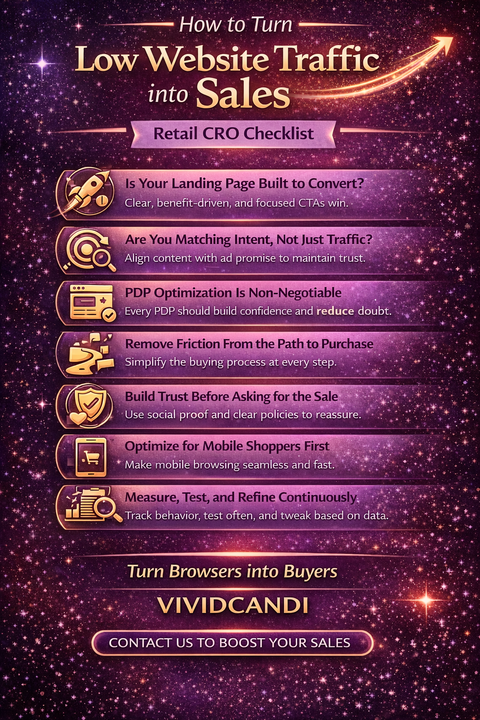
Step 1: Is Your Landing Page Built to Convert?
Your landing page is often the first real interaction with a shopper. If it doesn’t communicate value instantly, visitors won’t move forward.
Strong landing pages answer three questions immediately: What is this? Why does it matter to me? What should I do next?
For conversion rate optimization, clarity beats creativity. Headlines should be benefit-driven, visuals should reinforce the message, and calls to action should be obvious and action-oriented. If shoppers have to scroll or think too hard, conversion drops.
Step 2: Are You Matching Intent, Not Just Traffic?
One reason traffic doesn’t convert is misalignment between intent and content. A shopper clicking an ad expects continuity. When the landing page doesn’t match that expectation, trust erodes.
A key part of any retail CRO checklist is message alignment. Ads, search results, and landing pages should tell the same story using consistent language and visuals. Alignment reassures shoppers they’re in the right place.
Step 3: PDP Optimization Is Non-Negotiable
Product Detail Pages (PDPs) are where most retail conversions are won or lost. Weak PDP optimization is one of the most common causes of low conversion.
High-performing PDPs focus on confidence. Clear product imagery, concise benefits, transparent pricing, delivery details, and easy-to-find calls to action reduce hesitation. Social proof, such as reviews or usage cues, further supports the buying decision.
If shoppers reach a PDP and still leave, the page isn’t doing enough work for them.
Step 4: Remove Friction From the Path to Purchase
Every extra step reduces conversion. Complicated navigation, slow load times, or hidden information forces shoppers to work harder than they should.
From a conversion rate optimization perspective, the path to purchase should feel effortless. Navigation should guide users intuitively, key information should be visible without digging, and checkout should feel fast and predictable.
Step 5: Build Trust Before Asking for the Sale
Trust is a major conversion driver, especially for new visitors. If shoppers aren’t confident in the brand, they won’t buy—no matter how good the product is.
Trust signals like clear policies, recognizable branding, secure checkout cues, and consistent design all support PDP optimization and landing page performance. Small details often have a big impact on conversion.
Step 6: Optimize for Mobile Shoppers First
A retail CRO checklist that ignores mobile is incomplete. Many conversions fail simply because the mobile experience is clunky or slow.
Buttons should be easy to tap, text should be readable, and critical content should appear early. Mobile-first conversion rate optimization ensures you’re not losing sales from your largest traffic segment.
Step 7: Measure, Test, and Refine Continuously
Conversion optimization isn’t a one-time fix. Brands that improve consistently test landing pages, PDP layouts, messaging, and CTAs.
Track where users drop off, identify friction points, and refine based on behavior. Continuous testing is what turns low conversion into steady growth.
Turning Traffic Into Revenue Starts With Retail Marketing Experience
If your site has traffic but not sales, the opportunity is already there. The solution lies in smarter conversion rate optimization, better landing pages, and stronger PDP optimization.
Use this retail CRO checklist to turn browsers into buyers without increasing ad spend.
Not sure where your conversions are breaking down? Vivid Candi helps retail brands optimize digital experiences that turn traffic into sales. From landing page strategy to optimization, we design conversion-first retail marketing strategy plans. Contact us today.